When you think of space technology, do you picture astronauts floating around in shiny suits or perhaps a satellite beaming cat videos from the cosmos? While those images are entertaining, the reality is much more fascinating and essential to our everyday lives. Space technology encompasses a wide range of innovations that not only explore the final frontier but also improve life on Earth.
From GPS navigation to weather forecasting, the wonders of space technology play a crucial role in modern society. It’s not just about rockets and rovers; it’s about harnessing the power of the universe to solve real-world problems. So buckle up and prepare for a journey through the stars, where science fiction meets practical innovation and everyday conveniences.
What Is Space Technology
Space technology encompasses tools and systems designed for use in space exploration and practical applications on Earth. Satellites serve as a prime example; they facilitate communication, weather monitoring, and navigation. Researchers develop various technologies for launching, operating, and maintaining spacecraft, making them essential for both scientific and commercial activities.
Innovations in spacecraft design, propulsion systems, and materials science play critical roles in advancing space missions. Organizations like NASA and private companies contribute to developments in these areas, enabling long-duration space travel and exploration of distant celestial bodies.
GPS technology represents a direct benefit of space advancements. It enhances navigation accuracy for millions of users worldwide. Ground-based applications also include disaster management and environmental monitoring, showcasing space technology’s relevance in various sectors.
Robotic missions expand our understanding of the universe. Rovers, such as those deployed on Mars, collect data and perform experiments autonomously. Their findings aid scientists in uncovering the mysteries of planetary systems.
Technological advancements often lead to practical terrestrial innovations. Materials developed for space applications have found uses in medical devices, telecommunications, and consumer electronics. These spin-off technologies illustrate that space research significantly impacts everyday life.
Understanding space technology involves recognizing the interconnectedness of scientific discovery and practical application. Through continuous innovation, societies can leverage resources from beyond Earth, addressing challenges and improving quality of life.
Key Components of Space Technology
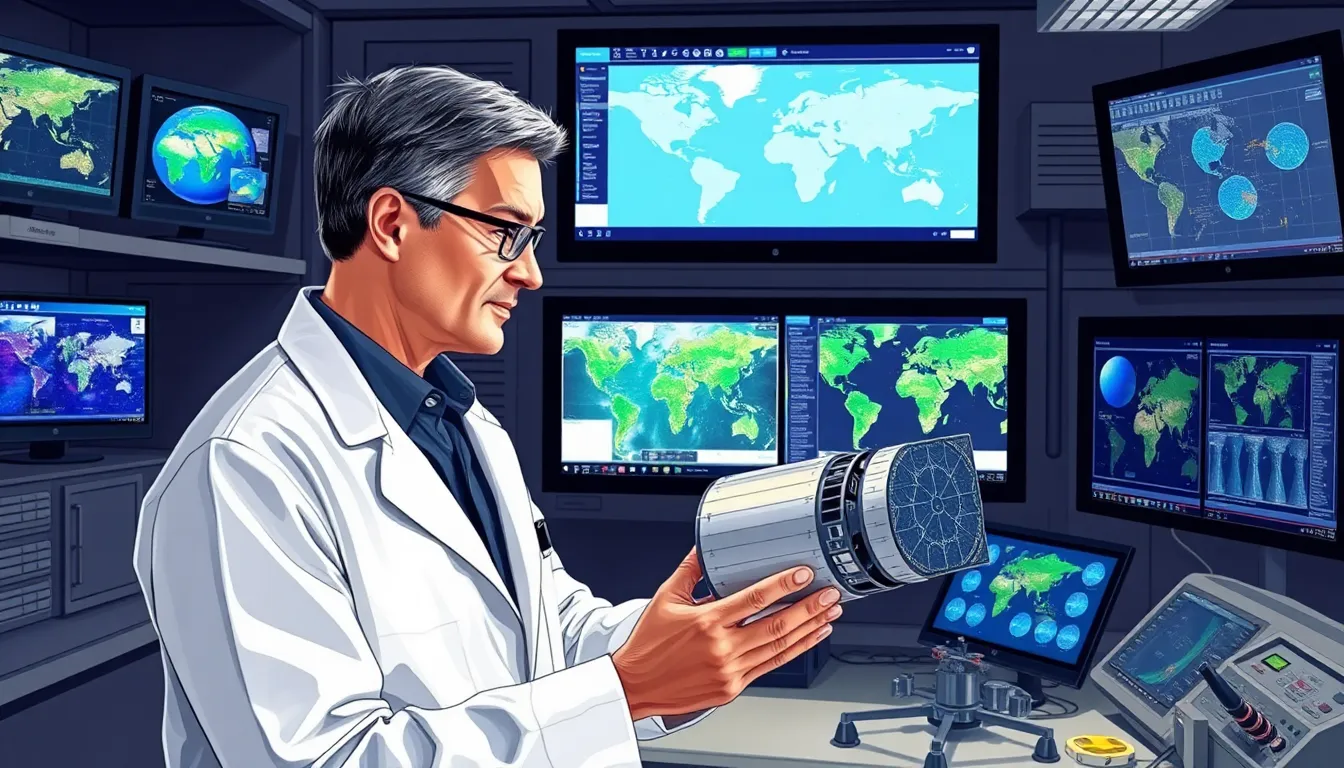
Space technology includes various elements that play crucial roles in exploration and everyday applications. Understanding these components reveals how humanity leverages the universe’s resources.
Satellites
Satellites serve multiple purposes, including communication, weather monitoring, and Earth observation. These devices orbit the Earth and provide invaluable data for navigation systems, like GPS. Innovations in satellite technology, such as miniaturization and enhanced sensors, improve the accuracy of weather forecasts and disaster response. Organizations like NASA and private space ventures continue to advance satellite designs, allowing for better connectivity and global communications. With advancements in satellite networks, remote sensing technologies contribute to agricultural efficiency and urban planning.
Spacecraft
Spacecraft are vital for exploring outer space and conducting scientific research. These vehicles transport astronauts and equipment beyond Earth’s atmosphere. Developments in spacecraft engineering focus on propulsion systems, materials, and life support technologies. Techniques such as reusable rocket parts reduce costs and increase mission frequency. The successful deployment of spacecraft, such as the Mars rovers, provides unique insights into planetary geology and potential for future human habitation. Additionally, autonomous systems enable spacecraft to gather data and perform experiments without direct human intervention.
Applications of Space Technology
Space technology finds application in various domains, profoundly impacting daily life on Earth. From communication systems to navigation and Earth observation, these technologies enhance efficiency and improve decision-making processes.
Communication
Satellites play a key role in global communication networks. They facilitate telecommunication, internet services, and broadcasting. Major advancements in satellite technology, such as low Earth orbit (LEO) satellites, reduce latency and improve data transmission speeds. Companies like SpaceX and OneWeb are deploying constellations of LEO satellites to provide broadband access in remote areas. Furthermore, satellite communication supports critical services during natural disasters, ensuring reliable connectivity even when terrestrial infrastructure fails.
Navigation
Global positioning systems (GPS) rely heavily on satellite technology for accurate navigation. Utilizing a network of satellites, GPS provides real-time location data for various applications, from mobile devices to vehicles. This technology enhances logistics for businesses, ensuring timely deliveries and route optimization. Pilots in aviation depend on GPS for safe navigation and flight planning. Furthermore, advancements in navigation systems improve search and rescue operations, enabling faster response times during emergencies.
Earth Observation
Earth observation satellites monitor environmental changes and collect vital data on climate patterns. They provide information for weather forecasts, agricultural monitoring, and disaster management. Remote sensing technology has transformed how scientists track deforestation, urban expansion, and natural resource distribution. Agencies like NASA and the European Space Agency use this data to create comprehensive climate models. Additionally, Earth observation aids in studying natural disasters, leading to effective response strategies and mitigation efforts.
The Future of Space Technology
Emerging technologies are shaping the future of space technology. Innovations such as advanced propulsion systems and artificial intelligence will drive exploration.
Innovations on the Horizon
Breakthroughs in areas like reusable launch vehicles and space habitats promise lower costs and longer missions. Sustainable space practices will include in-situ resource utilization, allowing astronauts to use local materials on other planets. Additionally, robotics will enhance mission capabilities, enabling autonomous operations on distant worlds. Quantum communication technologies may revolutionize data transmission, providing secure links across vast distances. Earth-based applications will benefit from advancements such as high-resolution imaging, enhancing disaster response and land management efforts.
Challenges Facing Space Technology
Addressing challenges in space technology is essential for progress. High development costs often limit access to space exploration and innovation. Furthermore, creating effective international regulations that ensure cooperation among nations remains complex. Space debris poses significant risks to operational satellites and spacecraft, necessitating solutions for debris mitigation and removal. Lastly, cybersecurity threats to satellite systems and communication networks require ongoing attention to safeguard critical infrastructure.
Space technology is a driving force behind modern advancements that shape daily life. Its influence extends far beyond exploration, impacting communication, navigation, and environmental monitoring. As innovations continue to emerge, the potential for addressing global challenges grows significantly.
The future holds exciting possibilities with advancements in propulsion, robotics, and artificial intelligence. While challenges remain, the ongoing evolution of space technology promises to enhance quality of life on Earth and expand human capabilities in the cosmos. Embracing these developments will be crucial for harnessing the full potential of space for the benefit of all.