Ever wondered what the sun’s up to when it’s not busy giving you that perfect tan? Welcome to the wild world of space weather, where solar flares and cosmic winds can turn a peaceful day into a dazzling light show—or a complete communication blackout. While most people are worried about their local forecasts, the real drama unfolds millions of miles away, affecting everything from GPS signals to power grids.
Imagine your favorite sci-fi movie, but instead of aliens, it’s the sun throwing a solar tantrum. Understanding space weather isn’t just for astronauts and scientists; it’s crucial for everyone living in our tech-driven world. So buckle up and get ready to explore the electrifying phenomena that keep our planet buzzing and occasionally leave us scratching our heads in confusion.
What Is Space Weather?
Space weather refers to the environmental conditions in space, particularly influenced by solar activity. These conditions can have significant effects on Earth and its technological systems.
Definition and Importance
Space weather encompasses the various phenomena resulting from the Sun’s activity, such as solar flares, coronal mass ejections, and solar wind. Understanding space weather is crucial for protecting satellites, communication systems, and power grids on Earth. Events like solar flares can disrupt radio communications, while coronal mass ejections can lead to geomagnetic storms affecting power infrastructure. Knowledge of space weather enables better preparedness for technology disruptions and helps mitigate risks to astronauts during space missions.
Key Components of Space Weather
Key components of space weather include solar flares, solar wind, and geomagnetic storms. Solar flares represent bursts of radiation from the Sun’s surface, capable of affecting electronic systems on Earth. Solar wind, a continuous stream of charged particles released from the Sun, influences the Earth’s magnetic field. Geomagnetic storms arise when solar wind interacts with the Earth’s magnetosphere, potentially causing widespread electrical disturbances. Monitoring these components is essential for forecasting space weather and minimizing its impact on daily life.
The Sun’s Influence on Space Weather
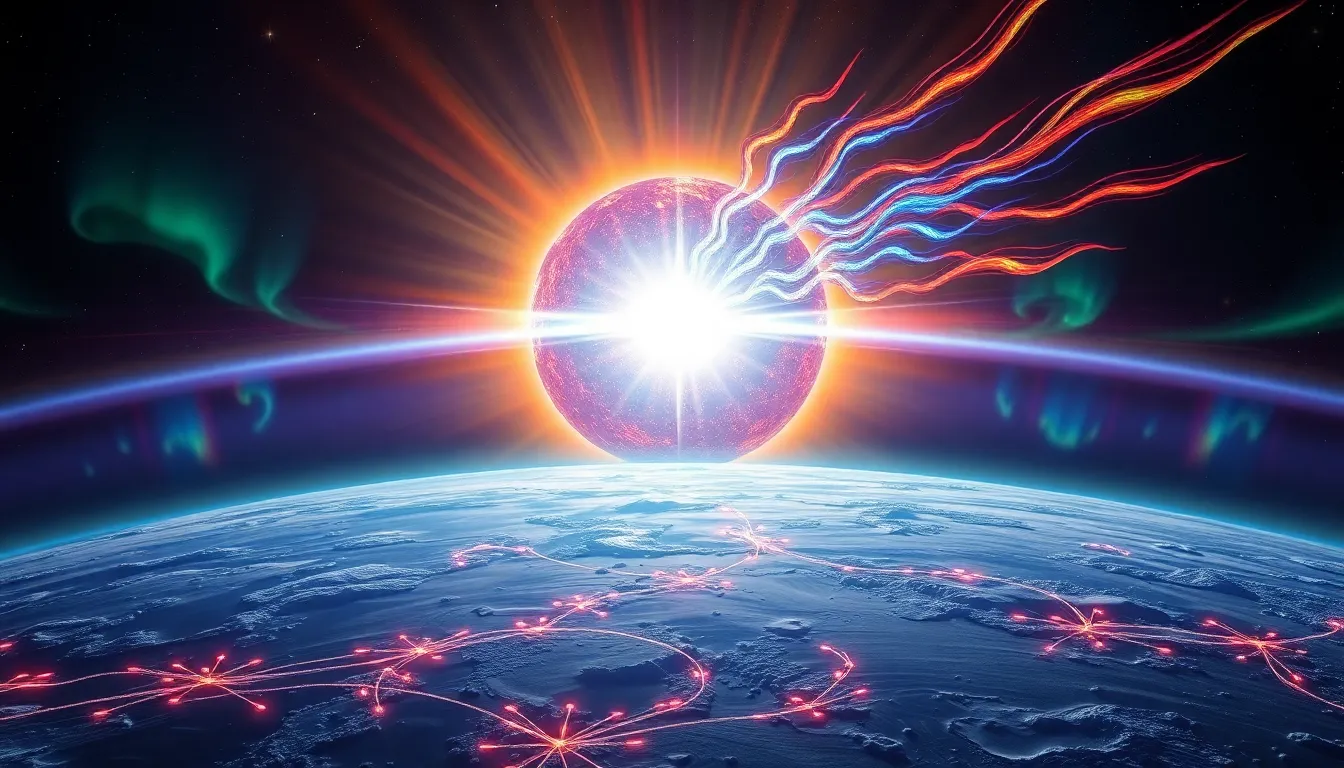
The Sun plays a crucial role in shaping space weather conditions. Its activity directly impacts Earth and technology.
Solar Flares
Solar flares are sudden bursts of energy from the Sun’s surface. These explosive events release radiation across the electromagnetic spectrum, including X-rays and ultraviolet light. They can affect satellite communications and GPS accuracy. For instance, a strong solar flare can disrupt radio signals, particularly in polar regions, leading to navigational issues. Scientists monitor solar flares to predict their potential impact on Earth’s magnetic field and infrastructure.
Coronal Mass Ejections
Coronal mass ejections (CMEs) involve significant releases of plasma and magnetic field from the Sun’s corona. These eruptions can send billions of tons of solar material into space at high speeds. When directed towards Earth, CMEs can induce geomagnetic storms, resulting in polar auroras and affecting power grids. Historical data shows that powerful CMEs have caused blackouts, with the Carrington Event of 1859 being a notable example. Tracking CMEs helps predict their trajectories and mitigate disruptions to technological systems.
Effects of Space Weather on Earth
Space weather significantly influences various aspects of daily life on Earth, especially technology and human health. Understanding these effects can help mitigate risks.
Impact on Satellites and Technology
Satellites experience disruptions during intense solar events, such as solar flares and coronal mass ejections. These disturbances can lead to communication failures, navigation inaccuracies, and even damage to onboard components. Increased radiation levels during geomagnetic storms threaten satellite systems with degradation and malfunction. Telecommunications networks often encounter interruptions due to these phenomena, impacting everything from cellphone signals to internet connectivity. The National Oceanic and Atmospheric Administration (NOAA) monitors space weather to mitigate these risks, providing timely updates to protect crucial infrastructure.
Effects on Human Health
Human health can also be affected by space weather, particularly during geomagnetic storms. Increased radiation exposure poses risks, especially for astronauts and airline passengers flying at high altitudes. Symptoms like headaches and fatigue may occur among individuals highly sensitive to electromagnetic fluctuations. Research indicates that geomagnetic storms correlate with an increased incidence of heart issues, although the exact mechanism remains under investigation. Awareness of these potential health impacts ensures appropriate precautions for those frequently exposed, enhancing safety during solar activity events.
Monitoring and Predicting Space Weather
Monitoring and predicting space weather involves the use of advanced technologies and scientific techniques. These methods help scientists understand solar events and their potential effects on Earth.
Tools and Techniques
Satellites play a primary role in observing solar activity. Instruments like the Solar and Heliospheric Observatory (SOHO) and the Solar Dynamics Observatory (SDO) provide real-time data. Ground-based observatories also contribute, using radar systems to track geomagnetic activity. Models and simulations further assist in predicting solar behavior. Space weather forecasters combine various data sources to assess the potential impacts of solar flares and coronal mass ejections. Effective communication of these findings helps mitigate risks to technology and public safety during significant solar events.
Importance of Early Warning Systems
Early warning systems for space weather are critical for protecting infrastructure and human health. NOAA’s Space Weather Prediction Center offers timely alerts related to solar storms. Individuals and organizations can receive these notifications before significant events occur. Preparing in advance minimizes disruptions to power grids and satellite operations. Those in high-altitude flights, for example, benefit from advance notice to ensure safety. Ultimately, efficient early warning systems enhance public awareness, creating a knowledgeable approach to managing the effects of space weather.
Understanding space weather is essential in today’s tech-driven world. The effects of solar flares and cosmic winds extend far beyond the atmosphere, influencing vital technologies that society relies on every day. As awareness grows about the potential disruptions caused by these celestial phenomena, individuals and organizations can take proactive steps to mitigate risks.
Monitoring space weather not only helps protect infrastructure but also ensures the safety of those operating in vulnerable environments. By staying informed and utilizing advanced predictive tools, society can better navigate the challenges posed by space weather, fostering resilience in an increasingly interconnected world.