Picture this: a world where your coffee brews itself while you’re still dreaming about your next vacation on Mars. Welcome to the realm of space age technology, where the future isn’t just a distant concept—it’s already knocking at our door. From smart gadgets that could make even the Jetsons envious to innovations that push the boundaries of human capability, this tech is transforming everyday life in ways we never thought possible.
Overview of Space Age Technology
Space age technology encompasses innovations developed for space exploration that ultimately make their way into everyday life. These advancements enhance experiences, increase efficiency, and broaden human capabilities.
Definition of Space Age Technology
Space age technology refers to scientific breakthroughs, tools, and systems initially designed for space missions. Innovations from this era include satellite communications, GPS navigation, and advanced materials. These technologies serve various applications, from improving healthcare with telemedicine to enhancing agriculture through precision farming. Space age technology continually transforms industries, showcasing the relationship between space exploration and daily conveniences.
Historical Context
The space age began in 1957 with the launch of Sputnik by the Soviet Union, marking a significant milestone in human history. This event spurred global interest in space exploration and technology development. NASA’s Apollo program pushed the boundaries further, paving the way for innovations like miniaturized electronics and computer technology. The 1980s saw the rise of space shuttle missions, allowing reusable spacecraft to advance scientific research. Each step in this timeline played a crucial role in developing technology that now permeates various aspects of modern life.
Key Innovations in Space Age Technology
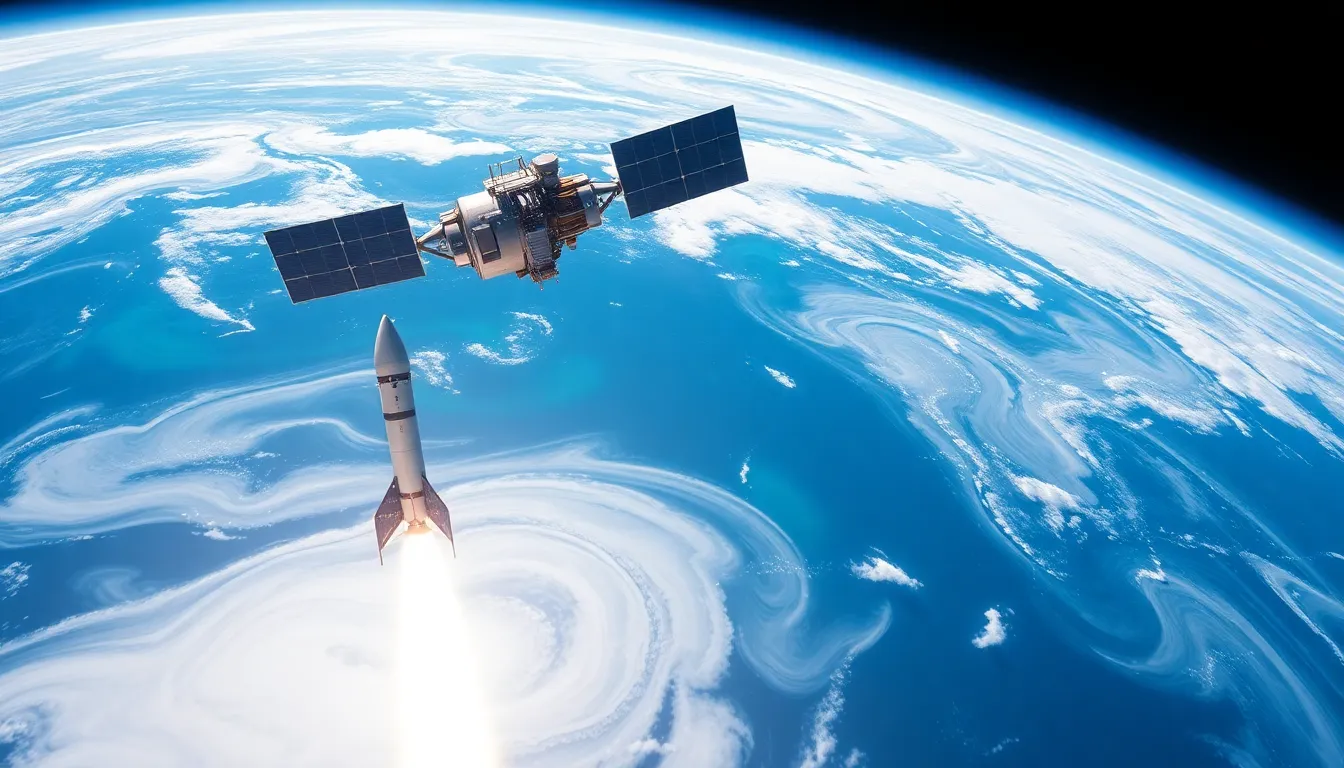
Space age technology has revolutionized multiple aspects of daily life. Significant advancements facilitate everyday tasks and enhance communication.
Satellite Technology
Satellite technology has transformed global communications. Satellites enable instant messaging, video calls, and streaming services. They also play a vital role in weather forecasting and environmental monitoring. GPS utilizes satellites to provide accurate location data for navigation. Everyday applications include ridesharing services and logistics management, linking individuals and businesses seamlessly. Organizations rely on satellite imagery for agricultural insights. High-resolution images assist farmers in monitoring crop health and optimizing yields.
Rocket Propulsion Systems
Rocket propulsion systems represent a significant leap in transportation technology. These systems allow for space exploration and satellite deployment. Liquid and solid propulsion technologies increase efficiency and reliability. Innovations in reusable rocket components minimize costs and maximize launch frequency. Companies like SpaceX have redefined commercial space travel. Enhancements in propulsion technology improve mission success rates and reduce environmental impact. Additionally, advancements contribute to interplanetary exploration, paving the way for future mission efforts.
Impact of Space Age Technology on Society
Space age technology significantly impacts society today, enhancing various aspects of life through innovation.
Advancements in Communication
Satellite technology plays a vital role in modern communication systems, enabling clear voice calls and high-speed internet access. Instant messaging and video conferencing platforms rely on satellites to connect people globally. Enhanced data transmission allows businesses to operate seamlessly across borders. Moreover, satellite communication supports weather forecasting, providing timely updates and improving safety. Global positioning systems have transformed navigation, making travel more efficient for individuals and logistics companies alike. As a result, daily interactions become more streamlined, fostering better connectivity between individuals and businesses.
Contributions to Medicine
Space age technology directly influences medical advancements, particularly in diagnostics and treatment methods. Techniques developed for space exploration, such as imaging technology and telemedicine, enhance disease detection and management. Medical devices often utilize materials derived from space research, leading to durable and efficient tools. For example, telemetry systems monitor patients’ vital signs remotely, allowing healthcare professionals to provide timely interventions. Additionally, research conducted in microgravity has led to breakthroughs in pharmaceuticals, improving drug formulation and delivery. This integration of space technology into healthcare not only increases the quality of care but also expands access to essential medical services.
Future of Space Age Technology
Space age technology continues to evolve, shaping a new era of innovation. Significant advancements promise to revolutionize life on Earth and beyond.
Emerging Trends
Artificial intelligence increasingly plays a role in space exploration. AI systems assist in autonomous navigation and data analysis, enhancing mission efficiency. Breakthroughs in robotics revolutionize tasks from assembly on spacecraft to repairs in hostile environments. 3D printing technology facilitates in-space manufacturing, reducing reliance on Earth supplies and enabling longer missions. Quantum computing gains traction, improving processing capabilities for complex calculations essential for space travel and exploration. Sustainable practices reflect emerging trends, with electric propulsion systems offering efficient alternatives for spacecraft propulsion.
Potential Challenges
Technological advancements present several challenges. Ensuring data security poses risks as satellite networks expand. Protecting against cyber threats becomes critical for maintaining the integrity of communications. Budget constraints often hinder progress, impacting research and development trajectories. Navigating regulatory frameworks can complicate the deployment of innovative technologies across industries. Environmental concerns arise regarding space debris management as the number of satellites in orbit increases. Addressing all these challenges requires collaboration among governments, companies, and researchers to create a sustainable future in space exploration.
Space age technology is not just a relic of the past; it’s a driving force shaping the present and future. As innovations continue to emerge from the realms of space exploration, they enhance everyday life in ways once thought impossible. From improved communications to advancements in healthcare, the impact is profound and far-reaching.
Looking ahead, the potential for further breakthroughs is vast. With ongoing collaboration and innovation, society can expect even greater transformations that will redefine how people live and interact. Embracing these advancements will be crucial in navigating the challenges and opportunities that lie ahead in the ever-evolving landscape of technology.