Ever wondered how planets dance around the sun without stepping on each other’s toes? Welcome to the fascinating world of orbital trajectories, where physics meets celestial choreography. Understanding these paths isn’t just for rocket scientists; it’s essential for anyone curious about the universe.
Understanding Orbital Trajectory
Orbital trajectories define the paths celestial bodies follow in space. These paths are crucial for understanding everything from satellite placements to planetary motion.
Definition and Importance
An orbital trajectory refers to the curved path an object takes around a celestial body due to gravitational forces. This concept is fundamental in astrophysics and space exploration, enabling accurate predictions of an object’s position over time. Grasping orbital trajectories helps scientists plan spacecraft launches, ensuring they reach their intended destinations. Accurate trajectory calculations enhance mission success rates and optimize fuel usage, significantly affecting mission costs.
Types of Orbital Trajectories
Various types of orbital trajectories exist, each with unique characteristics and uses. Circular orbits feature a constant distance from the primary body, maintaining a stable path. Elliptical orbits allow objects to approach and move away from the central body, creating varied gravitational influences. Parabolic and hyperbolic trajectories describe paths for objects not bound by gravity, such as comets or spacecraft escaping a planet. Each trajectory type plays a vital role in mission design and interplanetary travel.
Factors Affecting Orbital Trajectory
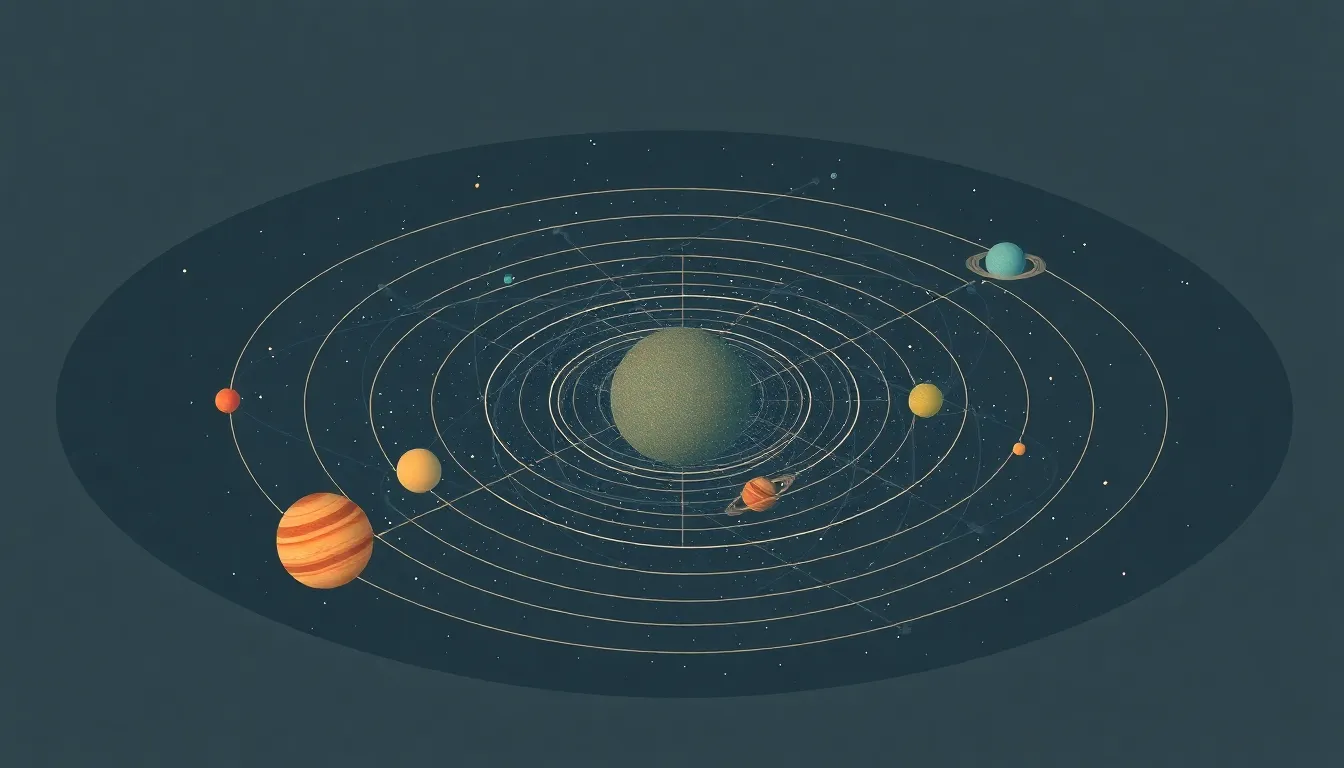
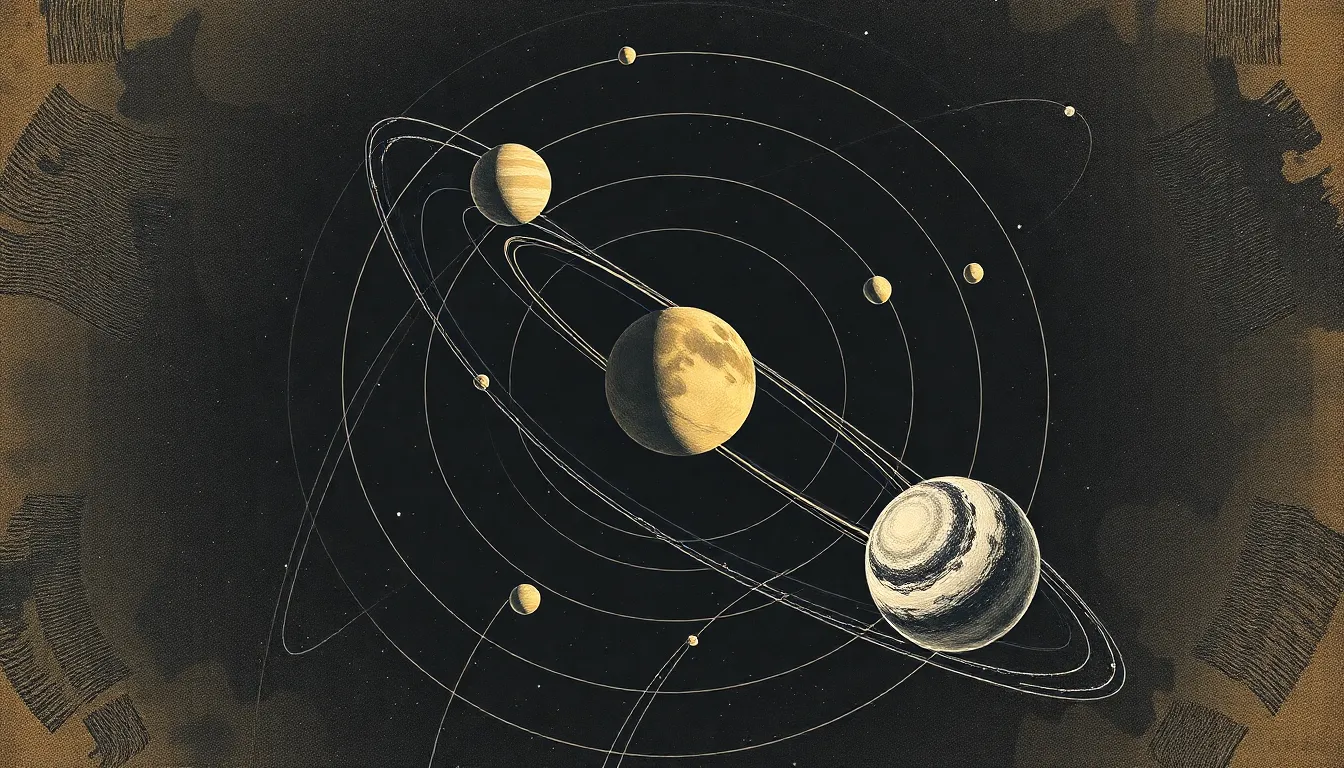
Multiple elements influence the path of an object in orbit. Two primary factors include gravitational forces and velocity along with energy.
Gravitational Forces
Gravitational forces exert a significant impact on an object’s orbital trajectory. Each celestial body, like a planet or star, generates a gravitational field that attracts other objects. This attraction dictates the curve of an orbit, determining how tightly or loosely an object revolves around another body. Orbital characteristics also rely on the mass of both the orbiting and central body. The stronger the gravitational pull, the more pronounced the effects on the trajectory. Understanding these principles is crucial for predicting motions and planning missions effectively.
Velocity and Energy
Velocity directly relates to the energy of an orbital body. Objects possess kinetic energy when moving, affecting their speed and path around a celestial body. Higher speeds can create a stable orbit at greater distances, while lower speeds might result in a spiral toward the central mass. Additionally, potential energy plays a role in orbital dynamics. Objects at greater distances hold more potential energy, influencing their ability to maintain specific trajectories. These variances in speed and energy highlight the complexity of orbital mechanics in space exploration.
Applications of Orbital Trajectory
Orbital trajectories play a crucial role in various applications, particularly in space exploration and satellite operations.
Space Missions
Space missions utilize specific orbital trajectories to optimize fuel use and mission duration. Engineers design paths that take advantage of gravitational assists, allowing spacecraft to gain speed while conserving resources. Navigation systems rely on predicted trajectories to ensure spacecraft arrive at their targets accurately. Accurate trajectory calculations reduce risks during launch and lander touchdowns on other celestial bodies. Diverse mission types such as lunar, Martian, and interplanetary missions employ various trajectories to achieve their objectives effectively.
Satellite Deployment
Satellite deployment involves careful planning of orbital trajectories to ensure desired coverage and functionality. Geostationary satellites maintain fixed positions relative to Earth, requiring precise orbits directly above the equator. Low Earth orbit (LEO) satellites operate at altitudes between 180 and 2,000 kilometers, making them suitable for various applications like Earth observation and communications. Medium Earth orbit (MEO) satellites, used by navigation systems, enhance global positioning accuracy. Understanding orbital trajectories enables effective satellite placement, enhancing communication networks and data collection efforts globally.
Challenges in Calculating Orbital Trajectory
Calculating orbital trajectories involves various complications that can affect accuracy. Factors like measurement errors and predictive modeling present notable challenges.
Measurement Errors
Measurement errors arise from several sources, including instrument calibration and environmental conditions. Precision becomes imperative, as even minor inaccuracies can lead to significant deviations in trajectory predictions. Satellite miscalculations often stem from data inaccuracies that result from atmospheric turbulence or sensor malfunctions. Robust calibration methods help mitigate these issues, ensuring reliable data inputs for trajectory assessments. Tracking the path of an object through multiple observations also aids in correcting discrepancies, yielding more reliable outcomes.
Predictive Modeling
Predictive modeling for orbital trajectories relies on mathematical simulations to forecast an object’s path. Models must account for numerous variables, such as gravitational influences and initial velocities. Dynamic changes in environmental conditions, like atmospheric drag or celestial perturbations, can complicate predictions. Iterative calculations enhance the model’s accuracy, allowing for adjustments in real time. Advanced algorithms, including those that employ machine learning, increasingly play a role in improving predictive outcomes. Each refinement in the model can lead to better trajectory planning and mission success.
Future of Orbital Trajectory Research
Research into orbital trajectories is poised for significant advancements. Emerging technologies will play a crucial role in enhancing precision and efficiency in space exploration.
Advancements in Technology
Innovative satellite systems are set to revolutionize orbital trajectory calculations. Advanced sensors will provide real-time data, improving accuracy in trajectory modeling. High-performance computing resources allow for complex simulations that account for numerous variables. Machine learning algorithms are proving effective in analyzing vast amounts of trajectory data, identifying patterns and optimizing paths. Moreover, collaboration among international space agencies will foster knowledge sharing, leading to enhanced methodologies in trajectory planning.
Potential Discoveries
Exploring new orbital trajectories presents opportunities for groundbreaking discoveries. Unique celestial events could reveal insights into gravitational interactions and planetary formation. Understanding the nuances of these trajectories enhances the potential for uncovering exoplanets and multi-body systems. Researchers predict that refined trajectory calculations will facilitate deeper exploration of asteroids and comets. Future missions may uncover resources in these bodies, driving advances in sustainable space exploration practices.