Human spaceflight isn’t just about astronauts floating around in zero gravity; it’s the ultimate adventure that pushes the limits of human potential. Imagine strapping into a rocket, blasting off through the atmosphere, and gazing down at Earth like it’s a beautifully crafted marble. It’s not just a dream anymore—it’s a reality that’s evolving faster than a toddler on a sugar rush.
Overview of Human Spaceflight
Human spaceflight involves sending astronauts beyond Earth’s atmosphere to explore outer space. This pursuit represents a significant achievement in engineering and science, aimed at expanding the boundaries of human exploration. Historically, missions like the Apollo program and the International Space Station (ISS) have showcased human capabilities in space.
In recent years, private companies have entered the field, increasing the accessibility of spaceflight. Firms like SpaceX and Blue Origin have successfully launched crewed missions, making space travel more commercial. These advances demonstrate the shifting landscape of human spaceflight, where longstanding governmental initiatives coexist with burgeoning private efforts.
Different types of missions characterize human spaceflight. Crewed flights to low Earth orbit help scientists conduct experiments in microgravity. Exploratory missions to the Moon and Mars focus on understanding celestial bodies and appraising their suitability for human habitation. Each mission provides vital data that advances knowledge and technology.
Psychological and physical challenges accompany space travel. Astronauts experience weightlessness, which affects body functions such as fluid distribution and muscle atrophy. Pre-flight training equips astronauts with tools to manage these changes, ensuring their well-being during missions.
Researchers continually study the impacts of long-duration flights on human health. Insights gleaned from extended ISS missions lay the groundwork for future deep-space endeavors. As exploration continues, understanding these effects becomes crucial in preparing for longer journeys beyond Earth’s orbit.
With the growth of human spaceflight, the dream of exploring the cosmos transforms into a real pursuit. The collaboration between international space agencies and commercial entities heralds a new era of exploration and discovery.
Historical Milestones in Human Spaceflight
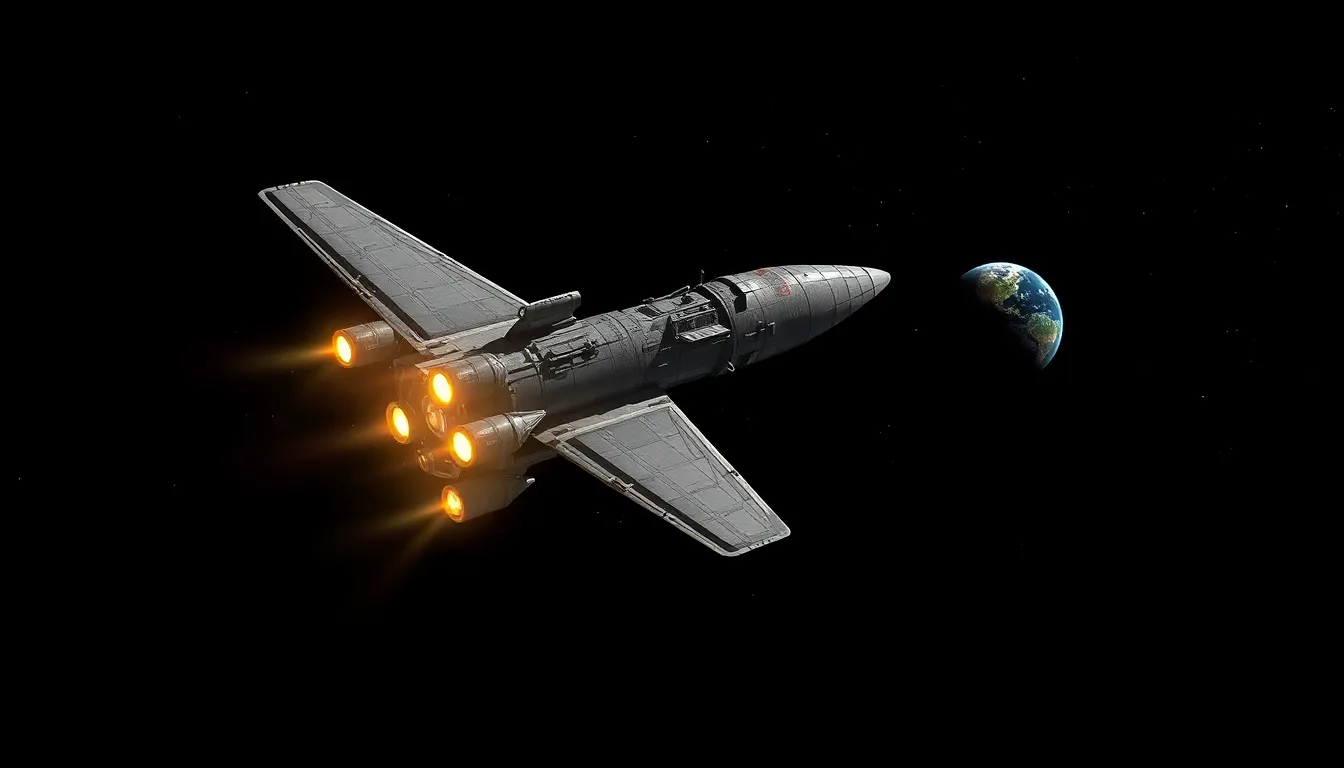
Human spaceflight has progressed significantly since its inception, marked by groundbreaking missions and explorations. Key milestones showcase humanity’s growth in reaching for the stars.
Early Russian Missions
The Soviet Union initiated human spaceflight with Vostok 1 on April 12, 1961. This mission orbited Earth, with Yuri Gagarin recognized as the first human in space. Following Vostok, missions like Vostok 6 included the first female astronaut, Valentina Tereshkova, in 1963. The Soviet program continued to advance with the development of the Soyuz spacecraft, facilitating crewed flights to various space stations. These early endeavors laid the foundation for future exploratory missions and set a competitive tone in the space race.
Apollo Program Highlights
NASA’s Apollo program achieved remarkable milestones from 1961 to 1972, particularly Apollo 11, which landed astronauts Neil Armstrong and Buzz Aldrin on the Moon on July 20, 1969. This mission represented the first human footsteps beyond Earth, inspiring generations. Additional missions explored the lunar surface and conducted scientific experiments, significantly enhancing our understanding of the Moon’s geology. Apollo 13, though a near-disaster, demonstrated problem-solving and teamwork during a critical in-space emergency. Overall, the Apollo program not only showcased technical prowess but also unified global interest in space exploration.
Current Human Spaceflight Programs
Human spaceflight programs continue to evolve, reflecting advancements in technology and international collaboration. These initiatives prioritize exploration and the study of outer space while expanding access for astronauts.
NASA’s Artemis Program
NASA’s Artemis program aims to return humans to the Moon by 2025. This initiative focuses on sustainable exploration and will establish a permanent lunar presence. Artemis III plans to land astronauts, including the first woman and the next man, on the lunar surface. In addition, the program envisions a lunar Gateway, serving as a waypoint for future Mars missions. Artemis emphasizes collaboration with international partners and commercial entities, enhancing the scope of exploration beyond Earth.
Private Sector Initiatives
Private sector initiatives have surged, fundamentally changing the realm of human spaceflight. SpaceX’s Crew Dragon spacecraft began launching astronauts to the International Space Station (ISS) in 2020, marking a milestone for commercial space travel. Blue Origin’s New Shepard offers suborbital flights, providing unique experiences for researchers and tourists alike. Additionally, Virgin Galactic focuses on commercial space tourism, demonstrating significant interest in the business potential of space exploration. These efforts underscore a trend towards greater accessibility and innovation in human spaceflight.
Challenges in Human Spaceflight
Human spaceflight faces numerous challenges that impact mission success and astronaut safety. These challenges encompass technological limitations and health risks for astronauts.
Technological Limitations
Technological limitations in human spaceflight significantly influence mission design. Current spacecraft rely on aging technology, posing risks during long-duration missions. Spacecraft propulsion systems often lack efficiency needed for interplanetary travel. However, advancements in materials science and robotics offer potential solutions for various operational challenges. Communication systems also experience delays that hinder real-time interactions. Innovations are crucial for enhancing safety protocols and response strategies during emergencies.
Health Risks for Astronauts
Health risks for astronauts present serious concerns during space missions. Prolonged exposure to microgravity affects bone density and muscle mass, resulting in physical deterioration. Cardiovascular changes may also occur, increasing the risk of health complications. Psychological stresses from isolation and confinement impact mental well-being. Sleep disturbances, common in space environments, hinder performance and decision-making. Ongoing research addresses these challenges, promoting effective countermeasures to safeguard astronauts’ health during long-term missions.
Future of Human Spaceflight
The future of human spaceflight looks promising, with numerous exciting developments on the horizon. Innovations are making extended exploration more feasible.
Mars Colonization Plans
Mars colonization plans involve sending humans to the Martian surface to establish a permanent habitat. The vision includes utilizing in-situ resource utilization, such as extracting water and producing oxygen from Martian regolith. NASA’s Artemis program aims to lay the groundwork by enhancing technologies that facilitate deep space missions. SpaceX has ambitious goals, including its Starship system designed for interplanetary travel, aiming for crewed missions by the mid-2020s. Various private and governmental efforts are focused on understanding Mars’s environment, supporting long-term habitation. These strategies rely on continuous research and technological advancements to address challenges like radiation exposure and life support systems.
International Collaboration Efforts
International collaboration efforts in human spaceflight are vital for enhancing exploration capabilities. Multiple nations partake in joint missions, sharing resources, expertise, and funding. The International Space Station serves as a testament to successful partnerships, with contributions from NASA, Roscosmos, ESA, JAXA, and CSA. Upcoming lunar missions under NASA’s Artemis program will involve collaboration with countries such as India, Japan, and the United Arab Emirates. These alliances promote shared knowledge and foster a sense of unity in space exploration. Global cooperation strengthens the foundation for future missions, enabling humanity to push the boundaries of science and innovation together.
Human spaceflight is on the brink of a new era that promises to redefine exploration and innovation. With advancements in technology and increased collaboration between government and private sectors, the dream of venturing beyond Earth is becoming more attainable.
As missions to the Moon and Mars take shape, the potential for human habitation on other celestial bodies is within reach. The challenges of space travel remain significant, yet ongoing research and development are paving the way for safer and more efficient journeys.
The future holds immense possibilities for humanity’s journey into the cosmos, inspiring generations to look beyond our planet and embrace the adventure that awaits among the stars.